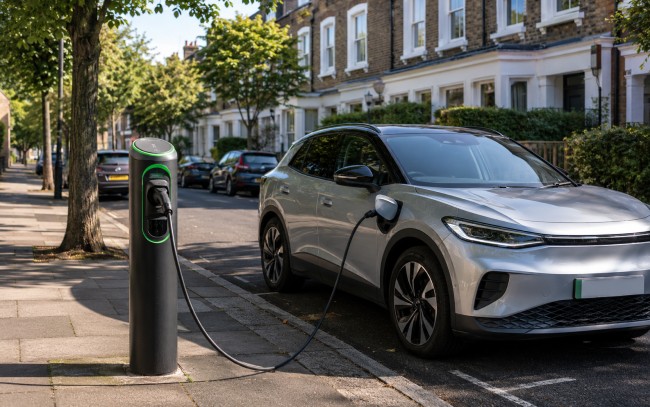
Britain’s move towards electric transport depends on more than modern cars. Drivers need affordable and dependable places to charge, especially people in flats or homes without driveways. Connected Kerb serves this need through on-street, community and destination charging. Founded in 2017, it combines hardware, software and council partnerships. Its mission is to make electric mobility inclusive while building infrastructure that can serve communities for years.
Connected Kerb and Its Mission
The legal business is Connected Kerb Limited, company number 11062616. It is an active private company registered in England, with its office at Cargo Works, 1–2 Hatfields, London. Its legal activity is electrical installation.
The company installs chargers on residential streets and in council car parks. It also serves workplaces, retailers, hotels, developers, commercial estates, fleets and healthcare organisations. Its purpose is to remove a major barrier to electric vehicle ownership: no private parking. Council agreements allow it to install, operate and maintain local networks while earning revenue from charging and service concessions.
Connected Kerb Founders and Leadership
The business was created by Stephen Richardson, Nick Dobie, Peter Howe, Paul Ayres and Richard Clements. Chris Pateman-Jones has served as chief executive since 2019 and leads its national expansion. Juliet Davenport OBE, who founded renewable energy supplier Good Energy, chairs the board.
The executive team includes Cecilia Amis as Chief People Officer, Ben Boutcher-West as Chief Technology Officer, Chris Matthews as Chief Network Delivery Officer, Claire Howling as Chief Financial Officer and Nathan King as Chief Network Operations Officer.
Connected Kerb Charging Products
The Chameleon is a compact bollard with two sockets, so two vehicles can charge at once. Its height supports easier access, while recycled steel reduces environmental impact.
The Gecko suits streets, posts and car parks, with important components protected in an underground node box. The wall-mounted Limpet serves workplaces and destination car parks, using material from two recycled tyres. The Scarab is built for commercial sites and housing developments.
Most units provide 7kW or 22kW AC power through a Type 2 socket. Drivers bring their own cable, making the units best for long stays or overnight charging.
Connected Kerb Smart Technology
Modular design simplifies repairs and upgrades while reducing repeated road works. The system can support smart charging, remote monitoring, load control, environmental sensors, parking technology, Wi-Fi, IoT and 5G services.
Planning software helps councils select sites using demand, space, power, accessibility, expected use and value. The mobile application lets drivers locate a unit, start a session, pay and follow progress.
Connected Kerb Quick Info
| Detail | Information |
|---|---|
| Company | Connected Kerb Limited |
| Founded | 2017 |
| Founders | Stephen Richardson, Nick Dobie, Peter Howe, Paul Ayres and Richard Clements |
| CEO | Chris Pateman-Jones |
| Chair | Juliet Davenport OBE |
| Headquarters | London, United Kingdom |
| Industry | Electric vehicle charging |
| Speciality | On-street and destination charging |
| Main products | Chameleon, Gecko, Limpet, Scarab and Trojan Flat & Flush |
| Charging speed | 7kW–22kW AC |
| Public network | 7,837 chargers as of June 2026 |
| Website | connectedkerb.com |
Connected Kerb Network Growth Across Britain
By the end of June 2026, the public network contained 7,837 chargers across 1,782 UK locations and worked with more than 27 local authorities. This placed it behind Shell Recharge ubitricity but ahead of char.gy by national public charger count.
The 2025 accounts recorded 10,519 installed sockets, up from 8,166. The total includes more than live public units. Energy supplied rose from 7,026 MWh in 2024 to 11,926 MWh in 2025.
Connected Kerb Funding and Ownership
A major equity package was completed in January 2025. The National Wealth Fund provided £55 million, while Aviva Investors added £10 million. The £65 million package supports a plan to move from approximately 9,000 sockets at the end of 2024 towards 40,000.
Both investors hold significant control. Each controls more than 25% but no more than 50% of voting rights, while Aviva also owns shares within that range. An earlier Aviva programme was worth up to £110 million.
A former ambition targeted 190,000 on-street chargers by 2030, but 40,000 is the more relevant goal. The company remains private, although shares can be matched through JP Jenkins. This is not a London Stock Exchange flotation.
Connected Kerb Financial Performance
Turnover reached £15.14 million in 2025, against £14.99 million in 2024. Gross profit fell to approximately £59,000, while the net loss was £15.10 million. Earlier net losses were £19.13 million in 2023 and £15.68 million in 2024.
Service concessions generated £6.96 million in 2025, power sales produced £4.47 million, and installation and operation work brought in £3.70 million. Cash closed at £17.87 million, while net assets improved to £38 million. Operating activities used £23.32 million in cash. The company employed an average of 100 people, and its auditor issued a clean opinion without material uncertainty over continued operation.
Connected Kerb Major Council Projects
Surrey’s programme targets 10,000 chargers by 2030 at approximately 1,500 locations, backed by up to £60 million of company investment. North Northamptonshire plans more than 1,500 sockets at over 320 sites, supported by £2.9 million from the Local Electric Vehicle Infrastructure fund.
A Midlands programme will deliver more than 6,600 sockets across Warwickshire, Worcestershire, Leicestershire and Rutland. Warwickshire will receive 2,100 lower-powered sockets and Worcestershire 1,700. The company and EZ-Charge will jointly support more than 1,500 new sockets in Oxfordshire.
Further commitments include more than 600 sockets in West Berkshire, over 900 proposed for Bedford and 826 in Blackburn with Darwen. Overseas, the business will install 270 Level 2 chargers in San Francisco under a US$15 million federal grant.
Connected Kerb Expands Through Trojan Energy
In February 2026, a subsidiary bought Trojan Energy’s business and assets through a pre-pack administration sale. The deal added its Flat & Flush pavement system and approximately 1,500 live charge points. All 63 employees transferred, while the purchase price remained private.
The system leaves a socket level with the pavement when unused. A portable adaptor connects it to the vehicle, reducing permanent clutter and suiting residential and historic streets.
Connected Kerb Charging Costs and Driver Experience
Prices vary by council and location. Most of the network costs close to 50p per kWh, while site rates range from 35p to 62p. Smart charging offers 44p per kWh off-peak and a 54p daytime or faster option where available.
Drivers can scan a QR code in the mobile application and pay by debit or credit card. Some sites support RFID cards, Zapmap or roaming services. There is normally no paid membership or connection fee, though parking restrictions may apply.
Connected Kerb Awards, Strengths and Challenges
The network won Zapmap’s Best On-Street and Destination Charging Network award for 2025–26. Its UK Apple application scores close to 4.8 out of five from roughly 1,700 ratings. Trustpilot gives about 1.9 from just over 20 reviews. Complaints concern faulty units, reduced speeds and slow support, but the sample is small.
The company also placed twenty-first in The Sunday Times 100 Tech hardware section and joined TIME and Statista’s World’s Top GreenTech Companies for 2026.
Strengths include investors, council contracts, modular equipment and smart tariffs. Challenges include heavy cash use, continued losses, grid delays, strong competition, support concerns and Trojan integration. The 2023 and 2024 accounts were filed late, although the 2025 accounts arrived on time.
Connected Kerb Future Outlook
Connected Kerb has become one of Britain’s largest public charging networks. Its technology and partnerships meet a genuine need for drivers without private parking. Management must now turn contracted sites into reliable live chargers, increase use, protect service quality and move towards lasting profit. Success would make electric transport fairer, cleaner and easier across Britain.
Also Read