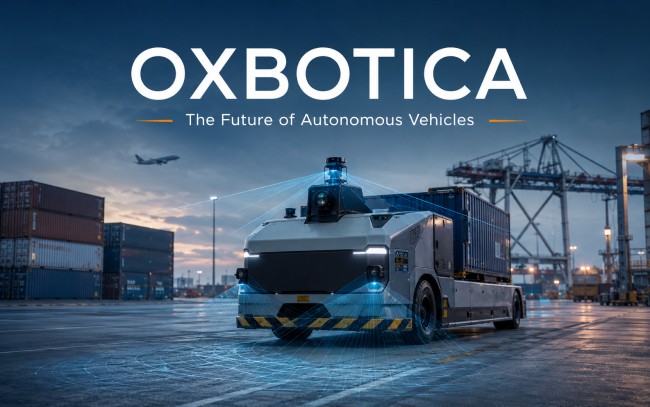
Oxbotica is a British technology company that develops autonomous vehicle software for industrial use. Founded in Oxford in 2014, the company has created systems that allow vehicles to complete useful tasks with limited human control.
In 2023, the company changed its name to Oxa. Although Oxa is now the official name, Oxbotica remains important because many of the company’s earlier achievements, partnerships and technology projects were completed under that identity.
Today, Oxa focuses on Industrial Mobility Automation. Its goal is to help businesses improve safety, productivity and efficiency through self-driving technology.
What Is Oxbotica?
Oxbotica was founded by Paul Newman and Ingmar Posner, who were connected with Oxford University’s robotics research community. Their work focused on artificial intelligence, robotics, computer vision and autonomous driving.
The company was created to develop flexible self-driving technology that could operate across different vehicles and locations. Instead of building a system for only one car, its engineers aimed to create software suitable for many types of industrial vehicles.
This approach became connected with the idea of Universal Autonomy. The concept means that different vehicles should be able to operate independently in different environments with the help of adaptable software and hardware.
Why Oxbotica Became Oxa
The company rebranded as Oxa in 2023. The new name reflects its wider business direction and its focus on commercial industrial applications.
The company now concentrates on Industrial Mobility Automation, which means using autonomous vehicles to complete repetitive driving tasks. These tasks include towing trailers, carrying goods, moving equipment and monitoring large sites.
Quick Information About Oxbotica
| Detail | Information |
|---|---|
| Current name | Oxa |
| Former name | Oxbotica |
| Founded | 2014 |
| Founders | Paul Newman and Ingmar Posner |
| Headquarters | Oxfordshire, England |
| Industry | Autonomous vehicle software |
| Main focus | Industrial Mobility Automation |
| Key technology | Artificial intelligence, robotics, computer vision and LiDAR |
| Main products | Oxa Driver, Oxa Hub and Oxa Foundry |
| Applications | Ports, airports, factories, warehouses and solar farms |
| Website | oxa.tech |
| Rebrand | Oxbotica became Oxa in 2023 |
How Oxa’s Technology Works
Artificial Intelligence and Computer Vision
Oxa’s autonomous systems use artificial intelligence and computer vision to understand their surroundings. Cameras, radar, LiDAR and other sensors collect details about roads, objects, buildings, vehicles and people. The software processes this material and creates a working view of the environment. It then helps the vehicle decide where to travel, how to avoid obstacles and when to slow down or stop.
Industrial locations can be difficult for vehicles because they contain workers, machinery, delivery vehicles and changing routes. Oxa’s systems are designed to handle these conditions while following programmed safety rules.
Mapping and Localisation
Autonomous vehicles must know their position and understand the route ahead. Oxa develops mapping and localisation systems that help vehicles identify where they are operating. This is useful in places where GPS signals are weak or unavailable. Tall buildings, large warehouses, containers and industrial structures can affect satellite signals. By combining digital maps with sensor data, the vehicle can continue moving through its environment. It can also adjust its route when conditions change.
Explainable Self-Driving Software
Oxa describes its self-driving software as configurable and explainable. Configurable software can be adapted to different vehicles, routes and business needs. Explainable technology helps operators understand why the system made a certain decision. This can support safety reviews, technical checks and better communication between the vehicle and its human supervisors.
Main Products Developed by Oxa
Oxa Driver
Oxa Driver is the company’s autonomous driving software. It is designed to control industrial vehicles and help them complete planned tasks with limited human involvement. The software can support towing, carrying goods, yard movements and other transport duties. It can also be adapted for different types of vehicles instead of being limited to one model.
This may allow businesses to upgrade some existing vehicles rather than replace an entire fleet. Suitable autonomy hardware can be added to a vehicle, while Oxa Driver provides the software needed for independent operation.
Oxa Hub
Oxa Hub is a cloud-based fleet management platform. It helps businesses monitor autonomous vehicles and organise their work from one central system. Fleet managers can use the platform to follow vehicle activity, plan tasks and review performance. It can also help coordinate autonomous vehicles with existing logistics systems. This is important because self-driving technology involves more than vehicle control. Businesses also need planning, scheduling, monitoring and communication.
Oxa Foundry
Oxa Foundry is a development toolchain used to build and test autonomous driving systems. It supports virtual testing and the creation of different driving situations. Engineers can use digital environments to examine how software handles obstacles, unusual routes, traffic movements and weather changes. This allows them to improve the system before testing it in a live location. Virtual testing can reduce risk, save time and help engineers examine situations that may be difficult to recreate in the real world.
Where Oxa Technology Is Used
Ports and Airports
Ports and airports depend on the regular movement of goods, containers, luggage and equipment. Many vehicles travel along planned routes several times each day. Autonomous systems can support these repetitive journeys and help improve the movement of freight. They may also reduce delays, improve site safety and allow employees to focus on tasks that require judgement. Oxa has worked on airport projects, including an autonomous airside trial at Heathrow Airport in the United Kingdom.
Factories and Industrial Yards
Manufacturing facilities often require vehicles to move materials between storage areas, loading points and production buildings. These journeys are necessary but repetitive. Autonomous vehicles can complete planned movements while following approved routes and safety procedures. Industrial yards may also benefit from automated vehicle positioning. Better coordination can reduce waiting time, improve organisation and increase the use of available vehicles.
Solar Farms and Energy Sites
Large solar farms and industrial plants need regular monitoring across wide areas. Staff may have to inspect equipment, boundaries and remote sections of a site. Autonomous vehicles can support asset and perimeter monitoring. They can travel through large areas and collect useful operational details while reducing the need for repeated manual journeys.
Important Milestones in the Company’s History
Oxa has developed a strong history in autonomous driving and robotics. In 2016, the company became the first in the United Kingdom to test self-driving vehicles on public roads. In 2017, it worked with Ocado Technology on an autonomous delivery trial. In 2018, the company completed an autonomous airside trial at Heathrow Airport. In 2019, its technology supported autonomous passenger rides through the DRIVEN project. In 2021, the company became the first autonomy business to have its safety case assessed by the British Standards Institution.
In 2022, it completed a European first involving a zero-occupancy autonomous vehicle journey on publicly accessible roads. In 2024, the company achieved its first commercial deployment of Oxa Driver through a partnership with Beep. These milestones show the company’s progress from university-linked robotics research towards commercial industrial services.
Safety at the Centre of the Business
Safety is one of the most important issues in autonomous vehicle development. A self-driving system must identify hazards, respond correctly and behave consistently in changing conditions. Oxa includes safety throughout its development process. This covers system design, software testing, vehicle validation, operational monitoring and continuous improvement.
The company also supports explainable autonomy. When operators can understand how a vehicle reached a decision, they may find it easier to assess, manage and trust the technology. Independent assessment is also valuable. The company’s safety assessment by the British Standards Institution was an important step in demonstrating its commitment to formal safety procedures.
Funding and International Growth
In March 2026, Oxa announced the first close of a Series D funding round worth $103 million. The funding included a $50 million commitment from the UK National Wealth Fund and support from NVentures, NVIDIA’s venture capital division. Existing investors, including IP Group, Hostplus and bp Ventures, also supported the funding round. The investment will help develop physical AI, robotics, Oxa Driver and Oxa Foundry.
The company plans to expand across the United Kingdom, Europe and the Middle East. In August 2026, Oxa and Dubai Future Foundation launched SHIFFT, a joint venture focused on autonomous logistics in ports and airports. The first scalable commercial deployment under the venture is planned for Dubai before the end of 2027.
The Future of Oxbotica and Oxa
The future of Oxa is connected with the growing need for industrial automation. Businesses face labour shortages, rising costs and pressure to move goods more efficiently. Oxa is focusing on controlled industrial environments where vehicles can perform clear and repeated tasks. These locations may provide a practical starting point for the wider use of autonomous technology.
The transformation from Oxbotica to Oxa represents an important stage in the company’s growth. From Oxford-based robotics research to international logistics projects, the business is working to make self-driving technology a useful part of modern industry.
Also Read