Carole Cadwalladr: The Investigative Journalist Who Challenged Big Tech and Changed Modern Journalism

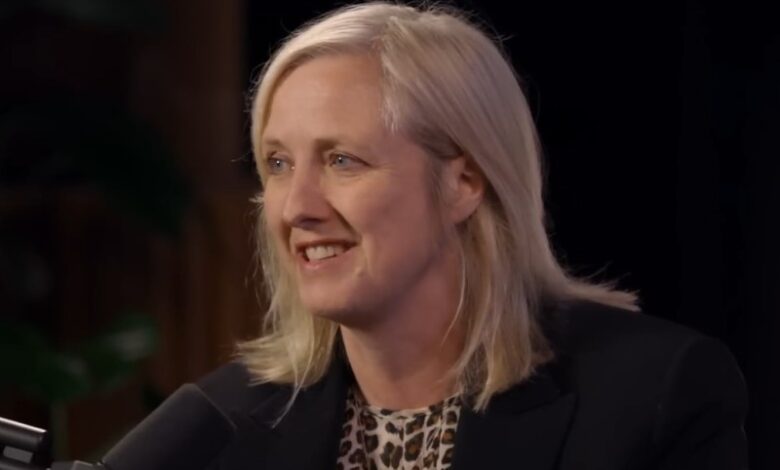
Carole Cadwalladr is a British investigative journalist, author and features writer known for examining the relationship between technology, politics and democracy. She gained international attention through her work on Facebook, Cambridge Analytica, political campaigning and the use of personal data. Her career has included major roles with The Observer, The Guardian and The Daily Telegraph, followed by independent journalism. She is now a co-founder and investigative journalist at The Nerve, a publication focused on culture, politics and technology.
Her work stands apart because she has spent years examining powerful technology companies and political networks. She has focused heavily on how digital platforms collect data, shape political debate and influence democratic systems. This work has brought major journalism honours, international recognition, legal challenges and invitations to speak on global stages. Her career now combines investigative journalism, campaigning, independent publishing and projects designed to challenge concentrated technological power.
Carole Cadwalladr Age and Early Life
Carole Jane Cadwalladr was born in October 1969 and is 56 years old as of September 2026. The date 10 October 1969 is widely associated with her, while UK Companies House records confirm her birth month as October 1969. She is British and spent an important part of her early life and education in Wales. Her later career brought her to London and placed her at the centre of British investigative journalism.
Cadwalladr attended Radyr Comprehensive School, located near Cardiff in Wales. She later studied at Hertford College, University of Oxford, giving her a strong academic foundation before developing her writing career. Her path did not begin solely with political investigations, as she worked across different areas of journalism and publishing. Those early experiences helped develop the detailed writing style that later became central to her investigative work.
Carole Cadwalladr Education
Radyr Comprehensive School
Her school years at Radyr Comprehensive School formed part of her Welsh upbringing. The school provided the early educational setting from which she later progressed to one of Britain’s leading universities. Her interest in writing eventually developed into a career covering culture, travel, politics, technology and major social issues. This broad background helped her move between long-form features and complex investigations with confidence.
Hertford College, Oxford
Carole Cadwalladr continued her education at Hertford College at the University of Oxford. Oxford has produced many leading writers, journalists, politicians and academics, and her time there preceded a varied media career. She later demonstrated an ability to explain difficult subjects without losing the human story behind them. That skill became especially important when her work moved towards political technology and digital influence.
Carole Cadwalladr Journalism Career
Her professional journey included work for The Daily Telegraph before she became closely connected with The Observer and The Guardian. She initially built experience through features and other forms of journalism rather than limiting herself to one narrow subject. Her work combined strong storytelling with an increasing interest in technology, power and political behaviour. Over time, those subjects became central to her identity as an investigative journalist.
Career at The Guardian and The Observer
Carole Cadwalladr worked as an investigative journalist and feature writer within The Guardian and Observer world for roughly two decades. Her professional record gives her period with The Guardian from January 2005 until October 2025. During those years, she produced work covering technology, politics, culture, democracy and powerful individuals and organisations. Her long association with The Observer became one of the defining parts of her professional life.
Her final Observer period came during major changes within British journalism and the newspaper itself. She also became active in supporting colleagues and served as a union spokesperson during industrial action involving Guardian and Observer journalists. This added press freedom and the future of journalism to the issues connected with her work. After leaving, she moved further towards independent and reader-supported journalism.
Carole Cadwalladr and the Cambridge Analytica Investigation
The defining investigation of Cadwalladr’s career came through her work on the Facebook–Cambridge Analytica scandal in 2018. The investigation examined how personal Facebook data had been obtained and used in political targeting without proper consent. It raised urgent questions about privacy, elections, political advertising and the enormous influence of social media companies. The story became an international controversy and placed her work before a global audience.
Cambridge Analytica became one of the best-known examples of the dangers connected with large-scale personal data collection. Cadwalladr examined links involving technology companies, political campaigns and the use of data during important democratic events. Her work also explored questions connected with the Brexit referendum and the 2016 United States presidential election. The investigation changed the debate about whether digital platforms should carry greater responsibility for political activity conducted through their systems.
Pulitzer Recognition
Her contribution to the Cambridge Analytica investigation brought recognition at the highest level of international journalism. She was associated with work named a 2019 Pulitzer Prize finalist for National Reporting, alongside journalists from The New York Times. The recognition reflected the significance of investigations into Facebook, privacy and political data use. It also established her reputation beyond Britain as an important voice in technology-focused investigative journalism.
Awards and Journalism Recognition
Carole Cadwalladr has received major recognition for work connecting data, technology and democratic politics. One of her most important honours was the 2018 Orwell Prize for Journalism, awarded for investigations concerning big data and political influence. Her journalism also received recognition connected with the George Polk Awards, adding to her international standing. These achievements placed her among prominent investigative journalists working on digital power and democratic accountability.
Her awards matter because the subjects she investigates are often technically complex and politically contested. She has built her career by turning issues such as algorithms, personal data and online political influence into understandable human stories. This has helped expand debate about the responsibilities of technology companies. It has also made her work influential among journalists, campaigners, academics and people concerned about digital rights.
Carole Cadwalladr TED Talks
Carole Cadwalladr became a prominent TED speaker after taking her investigations beyond traditional newspaper journalism. Her 2019 talks examined Facebook, Brexit, privacy and the wider power of technology platforms over democratic societies. One of her central arguments has been that debates about digital privacy are also debates about power. Her TED appearances gave her investigations access to millions of people beyond newspaper audiences.
The “Broligarchy” and Her 2025 TED Talk
In 2025, she returned to TED with a major talk centred on the increasing political power of leading technology executives. She has used the term “broligarchy” to describe a powerful group of technology figures whose wealth and platforms give them exceptional influence. The term became closely connected with her later journalism, campaigning and personal Substack work. Her focus expanded from individual technology scandals towards the broader relationship between digital infrastructure, corporate power and democracy.
Her personal newsletter also uses the broligarchy theme as part of its identity. Through this work, she examines how technology leaders, political movements and digital systems can combine to influence modern societies. She argues strongly for greater awareness of data collection, surveillance and corporate control of communication platforms. This work continues the same questions that first brought worldwide attention to her Cambridge Analytica investigations.
Legal Battle Following Her Journalism
Investigative journalism has also brought Cadwalladr serious legal pressure. Brexit campaign donor Arron Banks brought libel proceedings concerning statements connected with one of her TED presentations. The case became closely watched because it involved journalism, reputation, free expression and the risks faced by individual investigative journalists. Cadwalladr herself has spoken openly about the emotional and financial strain created by the legal battle.
The dispute became another important chapter in her professional story rather than ending her work. She continued writing, speaking and campaigning on the influence of technology and political power. Her experience also strengthened her interest in the protection of journalists and democratic institutions. She has since placed press freedom alongside technology accountability as a central part of her work.
The Citizens and Project Citizen
Founding The Citizens
In 2020, Cadwalladr co-founded The Citizens, a technology justice organisation focused on the influence of states and large technology corporations. The organisation brought journalists, researchers and campaigners together to examine technology, power and democratic rights. It represented an expansion of her work beyond traditional newspaper investigations. Instead of focusing only on publishing stories, she became involved in building organisations designed to support wider action.
Project Citizen
Her work expanded again through Project Citizen, a storytelling and media initiative created in 2024. The project brings investigative ideas into formats that can include film, audio and other forms of narrative journalism. Its focus remains strongly connected with Silicon Valley, political influence and systems of technological power. Cadwalladr’s involvement reflects her growing interest in finding new ways to bring complex investigations to wider audiences.
Carole Cadwalladr and The Nerve
A major new stage began when Cadwalladr became one of the founders of The Nerve. The independent publication was established by five women with backgrounds at The Guardian and The Observer. Its editorial identity combines culture with politics and technology rather than treating these subjects as completely separate areas. Cadwalladr serves as a co-founder and investigative journalist.
Her role at The Nerve follows roughly two decades within a major British newspaper organisation. The move gives her greater space to develop independent journalism while continuing investigations into technology and political influence. Her work there also reflects concerns about the direction of traditional media and the need for different publishing models. It places her current career at the meeting point of investigative journalism, culture and independent media.
Carole Cadwalladr Husband and Relationship Status
Carole Cadwalladr has not confirmed having a husband, and no reliable evidence establishes that she is currently married. She was previously in a relationship with a man named Dave, whom she has referred to as an ex-partner. Dave is the father of Hannah Mossman Moore, whom Cadwalladr knew from childhood and with whom she developed a close family relationship. Cadwalladr and Dave separated many years ago but continued to maintain a friendly connection.
Was Dave Carole Cadwalladr’s Husband?
There is no firm basis for describing Dave as her former husband because Cadwalladr has not stated that they were legally married. Her own descriptions present him as an ex-partner, while Hannah has also been described in connection with Cadwalladr as a former stepdaughter. The distinction matters because a close family relationship does not automatically establish a legal marriage.
Does Carole Cadwalladr Have Children?
No confirmed evidence establishes that Cadwalladr has biological children. Her family connection with Hannah Mossman Moore developed through her former relationship with Hannah’s father, Dave. Their bond continued even after the relationship with Dave ended, showing that the family connection remained meaningful. Cadwalladr has otherwise kept her private relationships separate from much of her professional career.
Carole Cadwalladr Companies and Directorships
Cadwalladr has also served as a director of companies connected with her media, journalism and civic projects. Her appointments include Power to Account Limited, DF Projects Limited, Project PG Limited, Project Citizen Limited, All the Citizens Limited and Studio Citizen Limited. She previously served as a director of Hyggelig Ltd, which has since been dissolved. Companies House records identify her as British and resident in England.
These appointments show how her career has grown beyond working as an individual writer for established newspapers. She is now involved in organisations supporting journalism, production, campaigning and technology accountability. Her professional direction combines editorial work with institution-building and independent media ventures. This makes her current career broader than the traditional role of a newspaper features writer.
Social Media and Independent Journalism
Carole Cadwalladr maintains a major presence on social media, particularly X, where her account has attracted more than 630,000 followers. Her Instagram audience has also grown beyond 45,000 followers, reflecting strong interest in her investigations and campaigning. She uses digital platforms to share journalism, discuss technology and promote work connected with The Citizens and The Nerve. Her online presence has become an extension of her investigative and campaigning work.
Carole Cadwalladr also publishes independently through Substack, where her writing explores the changing relationship between technology and political authority. This reader-supported direction gives her another route outside traditional newspaper structures. It also fits her wider interest in developing independent forms of journalism at a time of rapid change in the media industry. Her career therefore continues to develop across newspapers, digital publishing, campaigning, speaking and production.
Carole Cadwalladr as an Author
Long before the Cambridge Analytica investigation made her internationally recognised, Cadwalladr had established herself as an author. Her debut novel, The Family Tree, was published in 2005 and explored family relationships, identity, genetics and the question of nature versus nurture. The book showed a different side of her writing talent from the hard political investigations that later defined her career. It combined humour, family history and deeper questions about what shapes human identity.
Her fiction background helps explain the strong narrative quality found in much of her journalism. Rather than presenting technology only through statistics and technical concepts, she often builds investigations through people, events and consequences. This storytelling ability has helped complicated subjects become easier to understand. It remains one of the strongest features of her professional writing style.
Where Is Carole Cadwalladr Now?
In 2026, Carole Cadwalladr remains active as an independent investigative journalist, media founder, campaigner and writer. Her work with The Nerve, The Citizens, Project Citizen and her personal newsletter keeps technology and democratic accountability at the centre of her career. She continues to challenge the power of major digital corporations and influential technology leaders. Her professional direction shows no retreat from the subjects that made her one of Britain’s most recognised investigative journalists.
Final Thoughts
Carole Cadwalladr has built a career defined by persistence, ambitious investigations and a willingness to challenge institutions with enormous power. From early newspaper features and fiction to Cambridge Analytica, TED, The Citizens and The Nerve, her professional journey has changed considerably. Her work has helped place political data, digital privacy and technology power firmly within mainstream democratic debate. At 56, she remains an influential British journalist whose work continues to examine who controls data, platforms and political influence.
Also Read