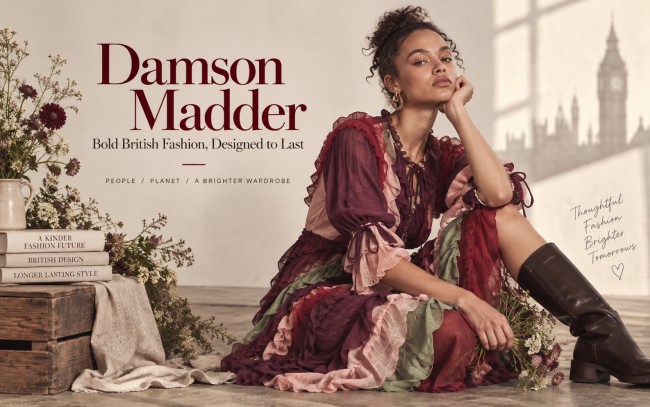
Damson Madder is a British fashion brand known for bold design, playful colour, distinctive prints and a strong commitment to responsible production. The label was born in London in spring 2020 with the aim of proving that exciting fashion and more thoughtful manufacturing can work together. Its pieces are designed to feel special while remaining practical enough to be worn again and again. The brand describes its guiding idea simply: “Designed in London, made to last.”
The company operates within the retail apparel and fashion industry and has built a recognisable identity in a competitive market. Its clothing often features expressive silhouettes, striking patterns, detailed finishes and a confident approach to colour. Instead of creating garments with a short life cycle, the brand focuses on quality, longevity and careful production. This philosophy has become central to its growing reputation in British fashion.
Damson Madder Founder and Brand History
Emma Hill and the Beginning of the Brand
Emma Hill founded the label after spending years working within the fashion industry. During that period, she became increasingly concerned about environmental damage and poor ethical practices that can exist behind clothing production. She wanted to create a business that worked at a slower and more considered pace. Strong design, however, would remain at the heart of the company.
The brand officially describes its birth as taking place in spring 2020. Its LinkedIn company details give 2019 as the founding year, which can reflect the earlier development stage before the label fully emerged. The legal business, DAMSON MADDER LIMITED, was incorporated later, on 1 April 2022. These dates represent different stages in the growth of the same fashion business.
How the Damson Madder Name Was Created
The name has a direct connection with the company’s early experiments in fabric and natural colour. Emma and her team worked with recycled and organic fabric bases while testing different natural dyes. Two early colour names became particular favourites: “Damson”, inspired by the rich plum shade, and “Madder”, connected with the plant traditionally associated with red dye. Combining the two names gave the label its distinctive identity.
This origin also reflects the principles that shaped the business from the beginning. Materials, colour, design and responsible production were not treated as separate ideas. They developed together as part of one creative process. That connection between style and responsibility continues to influence the way the company presents itself today.
Damson Madder Quick Info
| Detail | Information |
|---|---|
| Brand Name | Damson Madder |
| Founder | Emma Hill |
| Founded | Spring 2020 |
| Headquarters | London, United Kingdom |
| Industry | Retail Apparel and Fashion |
| Legal Name | DAMSON MADDER LIMITED |
| Company Number | 14017609 |
| Incorporated | 1 April 2022 |
| Website | damsonmadder.com |
| Company Type | Private Limited Company |
| Founder Nationality | British |
| Known For | Bold, distinctive and responsibly designed fashion |
| Main Focus | Quality, conscious production and durability |
| @damsonmadder | |
| Instagram Followers | 735K+ |
| Brand Message | Designed in London, made to last |
| Key Materials Focus | Organic, recycled and plant-based fibres |
Damson Madder Fashion and Design Philosophy
Bold Style Made for Long-Term Wear
The brand describes its core approach through three ideas: exciting design, enduring quality and conscious production. Its aim is not simply to make fashionable clothing for a single season. Each piece is created with the intention that customers will wear, love and rewear it. Longevity therefore plays an important role from the first stage of design.
Garments can begin their development 12 to 18 months before they reach a customer’s wardrobe. During this period, the team works on design, fit, materials and production while maintaining relationships with factories and suppliers. This slower process allows more time for refinement and quality control. It also supports the company’s desire to move away from disposable fashion habits.
Form, Function and Detail
Rather than depending entirely on short-lived trends, the company places emphasis on form, function and thoughtful details. Clothing is designed to feel expressive while remaining wearable. The goal is to create pieces that flatter, function well and continue to feel relevant beyond one season. This approach supports the wider message that clothing should earn a lasting place in a wardrobe.
Responsible Materials and Production
Responsibility is one of the strongest parts of the brand’s identity. The company openly accepts that fashion has environmental and ethical challenges and does not present sustainability as a finished achievement. Instead, it describes improvement as an ongoing process. Its stated goal is to reduce its effect on people and the environment while becoming more transparent about how garments are produced.
In 2025, more than 92% of the cotton used by the company was organic or recycled. This cotton was supported by recognised standards including GOTS, OCS and GRS certification. More than 75% of the fibres used were plant-based, including cotton, linen and paper-derived materials. Virgin synthetic fibres accounted for less than 5%, with the company committed to reducing that figure further.
Factory Standards and Ethical Expectations
Partner factories are required to follow the company’s code of conduct in addition to third-party audits. These standards create basic expectations for the businesses involved in making its clothing. The company also stresses the importance of long-term relationships with suppliers and manufacturers. That approach supports greater consistency in quality and working practices.
Its first Impact Report represents another step towards greater transparency. The report covers progress, challenges and areas where further improvement is needed. By publishing measurable figures, the company gives customers a clearer view of its material choices and production goals. This strengthens its position as a label trying to combine commercial growth with greater responsibility.
Repairs, Tailoring and Clothing Care
The company also encourages customers to extend the life of their garments through proper care, tailoring and repair. It has partnered with SOJO, a UK clothing alterations and repair platform, to provide professional services. Selected pieces can receive free bespoke tailoring or repairs. The purpose is to improve fit and prevent useful clothing from being discarded unnecessarily.
SOJO provides door-to-door collection and delivery within London and a postal service across the UK. London customers can generally receive completed items back within five days, while customers elsewhere in the country can expect a seven-day process. More than 6,000 DPD drop-off locations are available across Great Britain for postal services. Once an item has been altered, however, it is no longer eligible for the standard return policy.
Damson Madder Limited Company Details
DAMSON MADDER LIMITED is an active private limited company registered in the United Kingdom under company number 14017609. It was incorporated on 1 April 2022. Its registered office is 16 Great Queen Street, Covent Garden, London, WC2B 5AH. The company’s registered business activity covers the manufacture of other wearing apparel and accessories.
The business has three current directors. Founder Emma Louise Hill became a director on 1 January 2024 and is British, with residence in the United Kingdom. Jacob Ranulf Morris has served as a director since 1 April 2022, while James Philip Hoyle joined the board on 1 January 2026. The company remains active and continues to develop its position within the British fashion sector.
Team, Headquarters and Company Size
The fashion label is led by a close-knit, proudly female-run team based in North London. Its LinkedIn presence places the business within the 11–50 employee company-size category, while dozens of LinkedIn members associate the company with their current workplace. London remains central to the brand’s identity, creative direction and design process. Its British roots are reflected clearly across its public communication.
Although the legal registered office is in Covent Garden, the wider brand identity is closely connected with North London. This distinction is common for growing companies because registered and operational locations can serve different purposes. What remains consistent is the brand’s strong connection with London. Its designs, campaigns and overall visual character are firmly rooted in contemporary British fashion.
Damson Madder on Instagram and Social Media
Social media has become an important part of the company’s reach. Its verified Instagram account, @damsonmadder, has more than 735,000 followers and over 2,100 posts based on the figures provided. The account presents new collections, styling, campaigns and the brand’s distinctive visual identity. Its Instagram bio also carries the familiar message, “Designed in London, made to last.”
The company maintains a presence on TikTok and Pinterest as well. These platforms allow it to communicate directly with a fashion-conscious audience while presenting new pieces in a more visual and creative way. Social channels also help support collection launches, brand events and promotions. This digital strength has helped the label develop recognition beyond its London base.
Why Damson Madder Stands Out
The strongest feature of Damson Madder is the way it combines expressive fashion with a more considered production model. It does not treat responsible practice as separate from creative design. Materials, durability, repairs, factory standards and product development are connected to the same long-term vision. That gives the brand a clear identity in today’s crowded fashion market.
From its spring 2020 beginnings to its growing international presence, the company has remained focused on bold design, quality and conscious production. Emma Hill’s original goal was to create something slower, better considered and more responsible without losing the excitement of fashion. That principle still defines the business today. Its message is simple but powerful: clothes should look distinctive, feel special and be made to last.
Also Read