NHS Fleet Solutions Explained: Car Leasing, Salary Sacrifice, Costs and Key Conditions

Editorial disclosure: This is an independent guide for general educational purposes. This website is not operated by, connected with or endorsed by NHS Fleet Solutions, Northumbria Healthcare NHS Foundation Trust or the NHS.
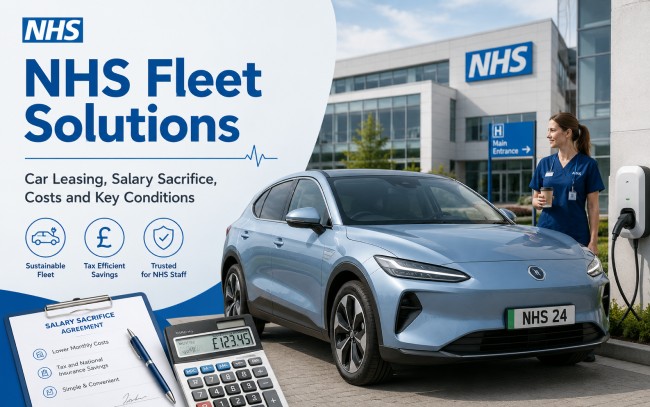
Leasing a new car can involve several separate costs, including insurance, servicing, breakdown cover, road tax and tyre replacement. For some NHS and public-sector employees, a salary-sacrifice car scheme brings many of these expenses together into one monthly payroll deduction. NHS Fleet Solutions is one of the providers offering this type of employee benefit. It provides access to new vehicles for eligible staff whose employers have registered with the scheme.
The arrangement may be convenient, particularly for employees considering an electric vehicle. However, it is still a binding financial agreement. Before ordering, employees should understand how salary sacrifice works, what is included, how tax is calculated and what happens if they leave their employer.
What Is NHS Fleet Solutions?
NHS Fleet Solutions is a public-sector salary-sacrifice scheme operated as part of Northumbria Healthcare NHS Foundation Trust. According to Northumbria Healthcare’s commercial services page, the service gives eligible NHS and public-sector staff a way to lease brand-new cars and obtain home electronics through salary sacrifice.
It is not a traditional private car dealership. NHS Fleet Solutions acts as the scheme administrator and manages the day-to-day arrangement between the employee, employer and leasing company. The vehicle itself is normally owned and registered by the leasing company. The official NHS Fleet Solutions FAQs explain that NHS Fleet Solutions is the fleet administrator rather than the legal owner of the car.
How Does the Salary-Sacrifice Scheme Work?
Salary sacrifice means an employee agrees to give up part of their contractual cash salary in return for a non-cash benefit. In this case, the benefit is the use of a leased car. The agreed amount is deducted from the employee’s salary through their employer’s payroll.
HM Revenue and Customs guidance on salary sacrifice explains that the arrangement requires a change to the employee’s employment contract. The employee must agree to accept a lower cash salary in return for the benefit. The deduction must not reduce the employee’s cash earnings below the applicable National Minimum Wage.
The employee does not usually pay a deposit. The scheme also states that a normal consumer credit check is not required because the monthly cost is collected through the participating employer. However, this does not mean that every application will be accepted. The employer must approve the order and confirm that the employee meets its requirements.
Who Can Apply?
The service is designed for staff working for participating NHS and public-sector organisations.
This may include employees of:
- NHS trusts
- Local councils
- Police organisations
- Universities
- Academy schools
- Primary care organisations
- Other participating public-sector employers
Working for the NHS or another public body does not automatically provide access. The employer must first be registered with NHS Fleet Solutions.
The employer may also have its own rules covering:
- Permanent or fixed-term employment
- Minimum salary
- Remaining contract length
- Probation periods
- Working hours
- National Minimum Wage protection
- Pension arrangements
- Retirement plans
The official guidance states that permanent employees are normally eligible, although individual organisations may apply different conditions. Employees should confirm their eligibility with their human resources, payroll or staff-benefits department before choosing a vehicle.
How Long Does the Lease Last?
NHS Fleet Solutions currently offers new-car contracts lasting either 24 or 36 months. Selected used vehicles may occasionally be offered on different contract lengths. Availability and conditions can change, so applicants should check the current quotation rather than relying on an older offer. A formal lease extension is not normally offered at the end of the original agreement. Employees should therefore begin considering a replacement vehicle well before their existing contract ends.
What Is Included in the Monthly Cost?
The scheme is designed to combine several normal motoring expenses into one monthly payroll deduction.
According to the official FAQs, the package generally includes:
- No initial deposit
- Full routine maintenance
- Manufacturer-scheduled servicing
- Motor insurance
- Breakdown cover
- Replacement tyres
- Windscreen repairs
- An MOT where required
The exact package can depend on the vehicle, employer and leasing company. Employees should read the individual quotation and scheme brochure before placing an order.
Insurance Cover
Motor insurance is included for the employee and up to four additional named drivers. An additional driver must be approved and shown as insured in the online account before driving the vehicle. A friend or relative cannot simply drive the car using a separate private insurance policy.
The standard insurance excess is stated as £250, although it may be higher where a driver has previous convictions or other risk factors. The exact excess will be shown in the insurance documents. Young additional drivers may increase the insurance cost and may need to be added during the ordering stage.
Servicing and Maintenance
Routine servicing is included in the lease. The driver remains responsible for arranging each service at the correct time. Ignoring the manufacturer’s service schedule may affect the vehicle warranty and could make the employee responsible for repair costs. Servicing is normally carried out by an approved main dealership or another location authorised by the leasing company.
Tyre Replacement
Replacement tyres are included in the monthly cost. However, a separate charge may be raised where a tyre is replaced because of certain types of sidewall damage rather than ordinary wear. The leasing company will normally tell the driver which tyre supplier to use.
Breakdown Cover
Breakdown cover is included for the contract period. The provider may differ depending on the vehicle manufacturer and leasing company. Contact details should be available in the driver handbook or online account.
Windscreen Cover
Windscreen repairs are included, but an insurance excess may apply if the whole windscreen needs to be replaced. Drivers should use the approved repair procedure shown in their account or driver handbook.
MOT
A vehicle leased for 36 months will normally require an MOT before it is returned. The MOT cost is included in the agreement, but the driver must arrange it before collection.
Is a Courtesy Car Guaranteed?
No. A courtesy car is not guaranteed as part of the standard lease.
NHS Fleet Solutions relies on availability from third-party providers, such as:
- Main dealerships
- Repair centres
- Approved body shops
- Accident-management companies
A temporary vehicle may be provided in some circumstances, but employees should not assume that one will always be available. This point is important for anyone who depends on the car for commuting, caring responsibilities or regular business travel.
Company-Car Tax and Benefit in Kind
A salary-sacrifice vehicle is normally treated as a company car for tax purposes.
The employee will therefore usually pay Benefit-in-Kind tax. The amount depends on:
- The vehicle’s list price
- Carbon dioxide emissions
- Electric driving range
- Fuel type
- The employee’s Income Tax rate
- Current HMRC rules
According to HMRC’s company-car percentage table, zero-emission cars have a Benefit-in-Kind percentage of 4% for the 2026–27 tax year. Cars with higher emissions can have much higher percentages. This is one reason electric cars may be more tax-efficient through salary sacrifice than petrol or diesel vehicles. However, a lower tax percentage does not automatically mean that every electric car will be affordable. Employees can also use the official HMRC company-car tax calculator to understand how a vehicle benefit may be taxed.
Will the Employee’s Tax Code Change?
The quotation should show an estimated monthly tax liability. How the tax is collected depends on the employer’s reporting system. Where the employer reports the vehicle through a P11D process, HMRC may adjust the employee’s tax code. Where benefits are taxed directly through payroll, the additional tax may be deducted from salary without a tax-code change.
Employees should check their payslip and HMRC tax account after receiving the car. Any unexpected change should be discussed with the employer’s payroll department or HMRC.
Could Salary Sacrifice Affect Pension or Statutory Pay?
Yes, it may affect pension calculations and other pay-related benefits.
HMRC explains that salary sacrifice can affect:
- Occupational pension contributions
- Overtime calculations
- Pay-rise calculations
- Maternity-related payments
- Statutory sick pay
- State benefits
- Contribution-based benefits
- Other earnings-related payments
Some employers calculate pension contributions using the employee’s original salary before sacrifice. Others may use the reduced cash salary. The position can vary between employers. NHS staff should check with their payroll team and the relevant pension administrator before agreeing to the deduction.
Employees should also consider possible effects on:
- Mortgage applications
- Personal loan applications
- Universal Credit
- Tax-Free Childcare
- Maternity or paternity plans
- Retirement planning
The monthly vehicle deduction should not be considered in isolation.
Electric Cars and Home Charging
Electric vehicles are a major part of many salary-sacrifice schemes because their Benefit-in-Kind percentages are lower than those of many petrol and diesel cars. Eligible employees choosing an electric vehicle may have the option to add a 7kW home-charging unit to their order.
The NHS Fleet Solutions home-charging guidance states that the unit and standard installation cost can be divided across the lease and added to the monthly deduction. Additional electrical work beyond the standard installation must normally be arranged and paid for separately.
The charging unit must be selected before the vehicle order is completed. It cannot normally be added through the scheme after the order or delivery stage.
Questions to Ask Before Choosing an Electric Car
Employees should consider:
Is Off-Street Parking Available?
Home-charger installation normally requires suitable private parking. Employees living in flats, rented homes or properties without a driveway may have fewer charging options.
Is Permission Required?
Tenants and leaseholders may need permission from a landlord, freeholder or property manager.
What Is the Real Driving Range?
Official range figures are not always achieved during everyday driving. Cold weather, motorway speeds, heating, air conditioning and driving style can reduce the available range.
How Much Will Public Charging Cost?
Rapid public charging may cost more than charging at home. Drivers should check prices near their home, workplace and regular travel routes.
Is Additional Electrical Work Needed?
Some properties may require cabling, consumer-unit changes or other electrical work beyond the standard installation.
Mileage Limits and Excess Charges
Every agreement includes an annual mileage allowance.
Employees should estimate mileage carefully by including:
- Daily commuting
- Business journeys
- School journeys
- Weekend travel
- Holidays
- Family visits
- Possible workplace changes
Exceeding the agreed mileage can result in a charge for every additional mile.
The current FAQ guidance gives the following rates:
- Petrol: 5p per mile
- Diesel: 5p per mile
- Electric: 10p per mile
- Standard hybrid: 10p per mile
- Plug-in hybrid: 15p per mile
VAT is added to these amounts.
Rates can depend on when the car was ordered and may change. The employee’s own contract should always be treated as the final authority. Driving fewer miles than expected does not normally result in a refund. A mileage allowance may sometimes be changed during the contract, but conditions apply. Current guidance states that at least 13 months must remain and the allowance can normally be changed only once.
What Happens When an Employee Leaves Their Job?
Leaving the employer during the lease can create a serious financial issue. A transfer may sometimes be possible where the employee moves to another participating public-sector organisation. However, a transfer is not guaranteed.
The scheme states that a transfer cannot normally be completed where there is a gap between the old and new employment. An employee leaving the public sector will almost certainly need to return the vehicle. Where a transfer is not possible, an early-termination charge may become payable.
Employees considering any of the following should review the agreement carefully:
- Retirement
- Relocation
- Career change
- Fixed-term employment
- Reduced working hours
- Moving to a private-sector employer
Cancellation Before Delivery
Once an order has been placed with the manufacturer, changing or cancelling it may be difficult. The official FAQs state that cancelling an order before delivery can result in a £500 cancellation charge.
Employees should not place an order until they are satisfied with:
- The monthly deduction
- Vehicle specification
- Estimated delivery date
- Mileage allowance
- Insurance conditions
- Tax cost
- Contract length
Manufacturer delivery dates may also change. An estimated date is not always a guaranteed delivery date.
Early Termination After Delivery
Ending the agreement after receiving the car may result in an early-termination fee.
The amount depends on factors such as:
- Original contract length
- Monthly lease cost
- Remaining contract period
- Date on which the agreement ends
The precise charge should be shown on the original order form. NHS Fleet Solutions also states that an early-termination request may need evidence of a valid lifestyle change. The fee must usually be paid before vehicle collection is arranged. Employees should not assume that redundancy, retirement, pregnancy, divorce or another major event will automatically remove the charge. The contract terms still apply.
Returning the Car
At the end of the agreement, the vehicle is normally returned to the leasing company.
Before collection, the driver should ensure that:
- Servicing is up to date
- The MOT is valid where required
- Tyres are legal
- No dashboard warning lights are showing
- All keys are available
- Supplied equipment is present
- Personal items have been removed
- Any private number plate has been removed correctly
The vehicle will be checked against fair-wear-and-tear standards. Damage beyond acceptable wear may result in an additional invoice. Employees should take clear dated photographs of the car before collection and keep copies of service and repair documents.
Can the Car Be Purchased at the End?
It may sometimes be possible to request a purchase price from the leasing company. However, NHS Fleet Solutions does not control the amount offered. The leasing company decides whether it is willing to sell the vehicle and at what price. The employee should not enter the lease assuming that ownership will be available or affordable at the end.
NHS Fleet Home Electronics
NHS Fleet Solutions also offers a home-electronics employee benefit. Northumbria Healthcare states that its Fleet Home Electronics scheme allows eligible staff to spread the cost of new electronics supplied in association with Currys.
Availability depends on the employee’s organisation. Employees should compare the total repayment amount with normal retail prices before ordering. Spreading a payment over 12 or 24 months does not always mean the product is cheaper.
Main Advantages
Possible benefits include:
- No initial vehicle deposit
- No conventional credit check
- A new vehicle
- Insurance included
- Servicing and maintenance included
- Breakdown cover
- Replacement tyres
- Predictable payroll deductions
- Lower company-car tax for some electric vehicles
- Cover for approved additional drivers
The scheme may suit employees who want fixed motoring costs and expect to remain with their employer for the full contract.
Main Disadvantages
Possible disadvantages include:
- The employee does not own the car
- Benefit-in-Kind tax applies
- Salary-related benefits may be affected
- Early termination can be expensive
- Leaving the employer may require the car to be returned
- Excess-mileage charges apply
- Damage charges may apply
- Courtesy cars are not guaranteed
- Delivery dates may change
- Lower-than-expected mileage is not normally refunded
Is NHS Fleet Solutions Worth It?
The answer depends on the employee’s personal circumstances.
It may be suitable for someone who:
- Wants a new car without paying a deposit
- Values inclusive servicing and insurance
- Has stable public-sector employment
- Can accurately estimate annual mileage
- Understands the tax and pension effects
- Is considering a low-emission or electric vehicle
It may be less suitable for someone who:
- Plans to change jobs soon
- Has an uncertain income
- May retire during the lease
- Drives unpredictable mileage
- Wants to own the car
- Could be affected by lower pensionable pay
- Needs guaranteed replacement transport
The monthly deduction should be compared with the full cost of alternative options, not only a dealership finance payment.
Checks to Make Before Ordering
Before accepting a quotation, check:
- The exact reduction in take-home pay
- The Benefit-in-Kind tax charge
- The effect on pensionable earnings
- The annual mileage allowance
- Excess-mileage rates
- Insurance excess
- Additional-driver costs
- Early-termination charges
- The process for leaving the employer
- Home-charger installation costs
- End-of-lease damage rules
- The estimated delivery date
Employees should keep copies of the quotation, order form, variation of contract, insurance policy and driver handbook.
Official Contact Details
The official telephone number is 0344 811 8228. General telephone support is available from 9:00 am to 5:00 pm, Monday to Friday. Applications, quotations and account services are available through the official NHS Fleet Solutions website.
Final Assessment
NHS Fleet Solutions is a genuine public-sector employee-benefit service operated as part of Northumbria Healthcare NHS Foundation Trust. It offers eligible NHS and public-sector staff a way to lease a new car through salary sacrifice, with insurance, servicing, maintenance and breakdown cover included. The arrangement may provide convenience and potential tax advantages, particularly for electric vehicles. However, it is not free motoring and does not guarantee that every employee will save money.
Before signing, employees should consider the monthly deduction, company-car tax, pension effects, mileage charges and the financial consequences of leaving their employer. Reading the full contract and obtaining personal guidance from payroll, HMRC or a qualified adviser is the safest approach.